
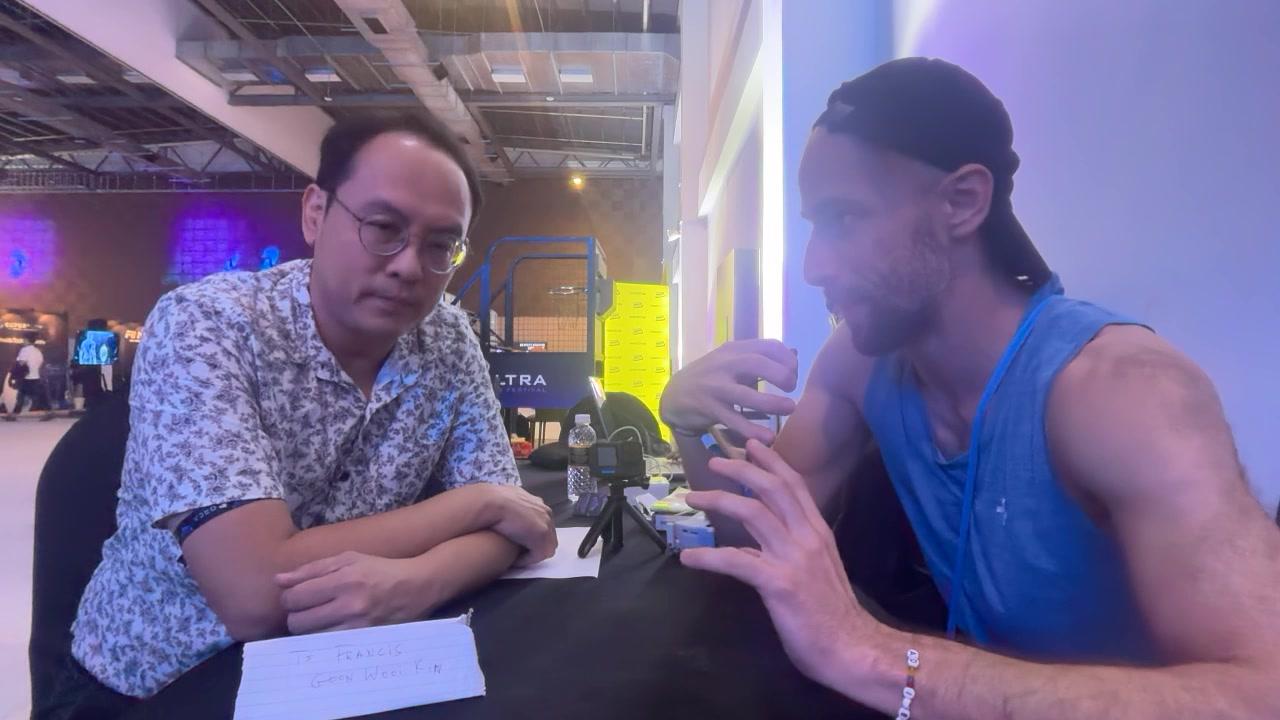
I met Francis Goon by chance. My friend Daryl and I had found a table with some power outlets at the Ultra Web3 festival, started talking with one person, and Francis walked over. Within a few minutes the whole arc of his story was on the table, and it was interesting enough that we sat down to record it. This is his first time doing an interview like this, and I'm glad we caught it.
Two careers, one skill
Francis started as an engineer. He studied electrical and electronics, then spent about seven years as an R&D engineer at semiconductor and electronics multinationals, the kind of names that anchor Penang's industry. After that came fourteen years at MIMOS, Malaysia's national applied research center, a government agency under the Ministry of Science, Technology and Innovation whose job is to create technology platforms: in software, hardware, semiconductors, and services, and then “seed” them to industry so companies can take them up and mature them into products.
His role there was one most people never think about. MIMOS builds the technology; someone has to make it usable to the outside world. That someone was Francis. He wrote the technical literature: the manuals, the specifications, the setup guides, the partner materials. “I work with lab owners that have the technology, so I need to translate that into product specifications, into instructional materials, into setup guides.” He estimates that at one point nearly all of MIMOS's technology platforms passed under his purview.
The work of translation
What makes this concrete is the example he reached for: a handheld biosensor. Instead of going to a hospital and having blood drawn to check your parameters, MIMOS built a device you can hold in your palm that uses photonics (light) to triangulate and map your blood and physiological parameters, closely correlated to an actual lab result. No needle, no sample.
To write about a device like that, you have to understand it. You talk to the engineers, you grasp how the light technology actually maps to a blood panel, and then you put it into words a partner or a customer can follow. That is the quiet skill underneath both halves of Francis's career: taking something dense and specialized and making it clear. It is the same muscle he now uses to teach.
Why he started teaching
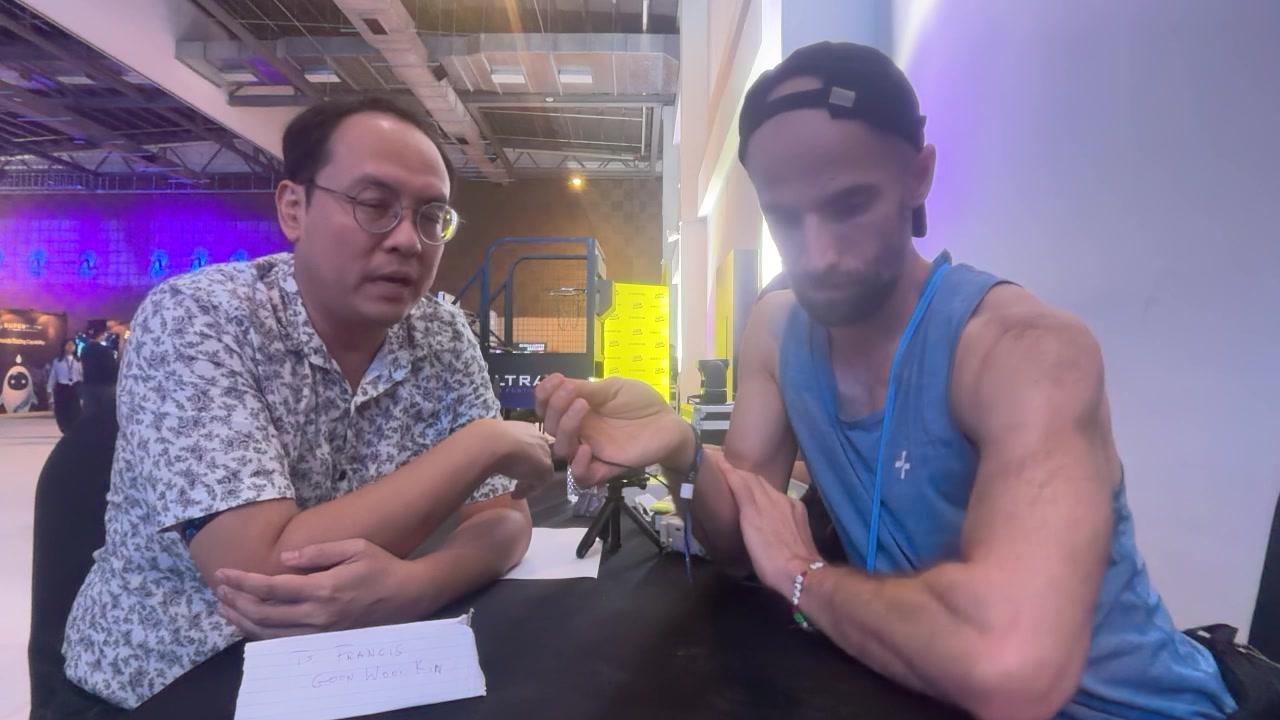
The pivot was not a grand plan. After fourteen years, Francis stopped, moved back to Penang, and gave himself time to reset. Then he looked for a job, and ran into the “harsh reality” of Penang: the jobs there are overwhelmingly manufacturing and semiconductor roles, and they want engineers. Technical communication was a sliver of the market. After a year of interviews, fairs, and HR conversations, “nothing is coming about.” Then a friend asked him to teach his daughter some Malay. That was the seed. Malay classes led to English classes for the international community, and AI teaching happened almost by accident, when another friend pointed out that Francis was already using AI to design websites, posters, slides, and long documents, and told him to package that as a class.
The fear, then and now
The thread I keep coming back to is fear. Francis is direct about it: he can help someone lose their fear of AI within the first ninety minutes of contact. And when I asked about his own first computer, the story rhymed.
He had a computer at home before he was ten, late 1980s or early 1990s, a little tower with a floppy disk and a very early version of Windows. And he was scared of it. “It was the blue screen, then everything you had to type, type, type.” No interactivity, commands you had to memorize, a floppy disk to wrestle with. He avoided it for years, until college in the early 2000s forced him to use it. That childhood friction is exactly the fear he now sees in adult beginners. The difference, he points out, is that the screen has changed: it is fluid now, and there is “always the same box in the middle” waiting for a prompt.
Losing the fear
His closing advice is almost disarmingly simple, and it is the line I'll remember.
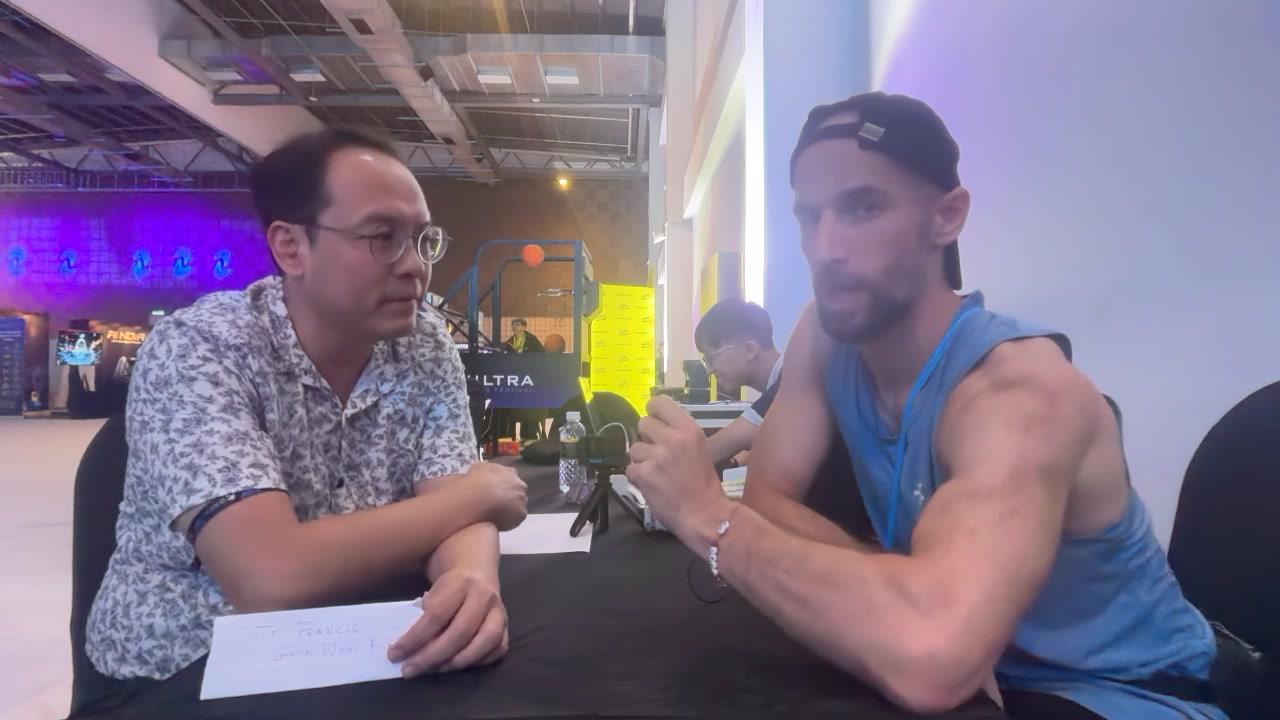
AI is not going to eat you. It's just a screen with a box in the middle for you to put your prompts. If you do wrong, it won't penalize you. It won't crash your system.
So try one tool a day, Gemini today, ChatGPT tomorrow, and if you get stuck, tap the little microphone and ask the AI how to do the thing you are stuck on. It is a small idea with a large reach. Francis's larger project, which he calls the AI Language Hub, pairs AI skills with English and Malay so people across Southeast Asia can both use the tools and communicate well enough to belong to the community using them. Underneath the crypto talk, the hackathon ideas, and the plans to run technology roadshows across Malaysia's technical universities, that is the through-line: technology is only useful once a person stops being afraid of it, and someone has to translate it down to the point where they can begin.
Key takeaways
- The same skill runs through both halves of Francis’s career: translating dense technology into something people can actually use.
- He starts with the person, not the tool. Help them lose the fear first, then the capability follows.
- Adult fear of AI mirrors an older fear of the computer. The interface changed; the human response did not.
- A practical on-ramp: try one AI tool a day, and when you’re stuck, just talk to it.
- Language and AI belong together. To use the tools in a region, you also have to communicate in it.
Links & mentions
Ts. Francis Goon on LinkedIn, technical writer, former R&D engineer, AI trainer. The AI Language Hub, his venture pairing AI skills with English and Malay coaching. MIMOS, Malaysia's national applied R&D center, where Francis spent fourteen years. Also mentioned: Crypto CSR, a friend's crypto education program; Horizon, an AI conference in Penang; and MTUN, the Malaysia Technical University Network.