
Meet the Computer
A sixty-minute wholistic creativity and STEM class for kids from about 2 to 12 years old. Every child gets personalized exercises and space for creativity, play and learning. Notebooks, pens and pencils are provided, kids keep their notebook and bring it to future classes, which build on each other and compound.
The hour
min
Arrival: breathing and short meditation
We arrive, settle, and put the rest of the day down. Breathwork and a short meditation, drawn from the practices executive coaches teach to millionaires, to bring attention into the room. This is also when we talk about why speaking, writing and the quality of your ideas are worth practising at all.
min
Stretching and movement
Yoga stretches, warrior pose, the kung fu attention pose, and a short standing workout. This wakes up the body, builds self-regulation and concentration, and releases excess nervous energy before we sit down to work.
min
Assignment 1: free drawing
One prompt, then free drawing led entirely by their own imagination. Nothing has been taught yet and there is nothing to copy. This is an exercise in imagination, not an explanation of anything. There is no wrong drawing, and the youngest children start wherever they are.
min
Assignment 2: expressive writing
An expressive writing and journaling exercise. Still not ideas, but experience: their imagination, something they remember, something they felt in their senses. Related to the day’s concept, never an explanation of it. Children who cannot yet write put down one letter or one word. Older children write full sentences.
min
The STEM concept
One new concept, for example AI, computers or blockchain, explained three ways in the same room: a version for a three-year-old, a version for a seven-year-old, and a version for a twelve-year-old. The course page carries an infographic for each age, three deeper paragraphs, and a short history of the idea.
min
Assignment 3: teach it back
Now they use their creativity and imagination to understand the idea, and then to communicate and express it: one page of drawing and writing that teaches the concept to somebody their own age. A twelve-year-old fills a page that would teach another twelve-year-old. A child who cannot write yet uses a drawing and a single letter or word. As they finish, each child can record a short video showing their drawings, their journaling and their explanation. Explaining it is how we know it landed.
The STEM lesson
How a computer works, explained by age
The same idea, told at the right depth for each child. Explain the youngest version to everyone, then add a layer for the older kids.
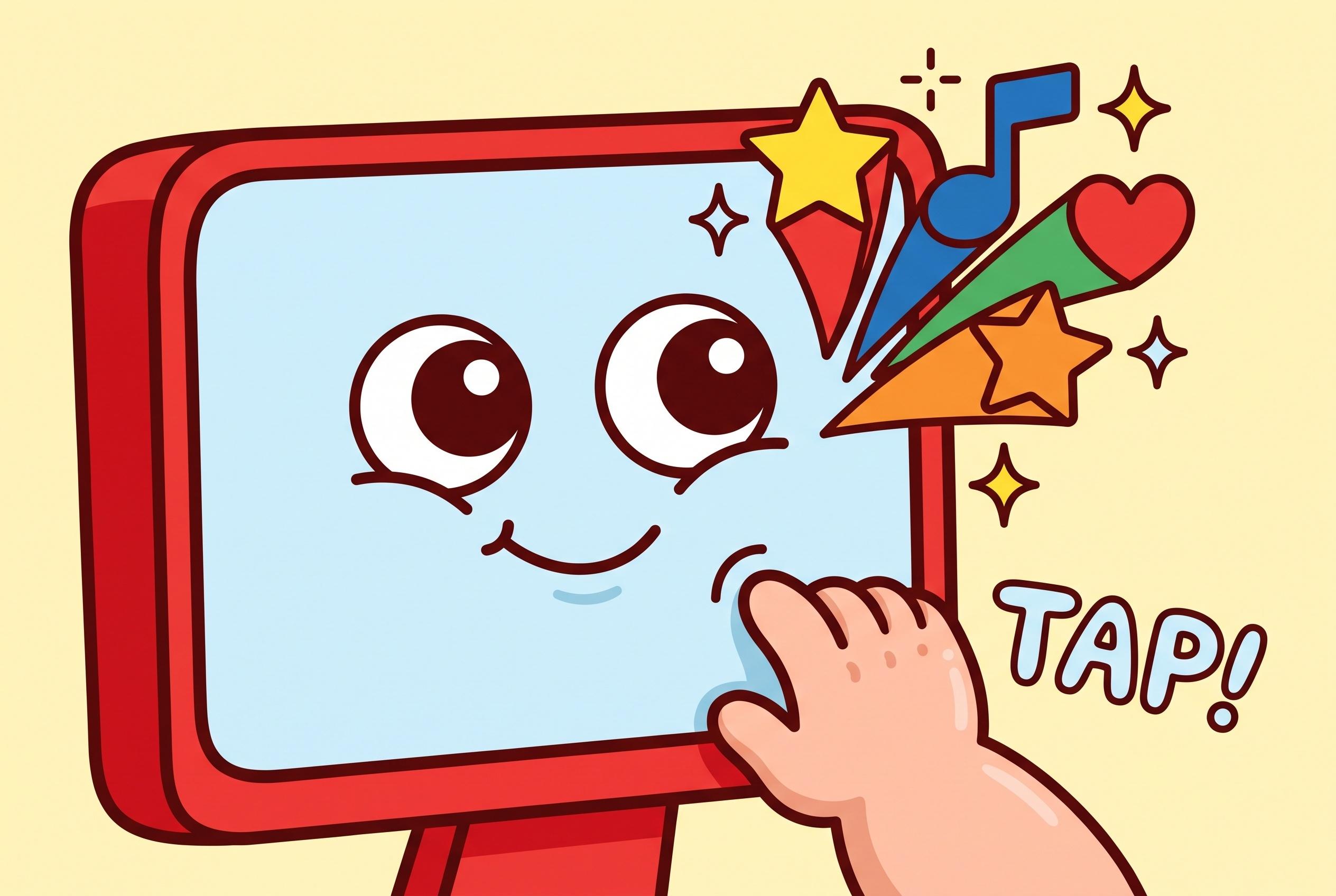
A computer answers you
You touch it, and it does something back. Tap the picture and the music plays. It is a friendly machine that listens to you: you do something, it does something.
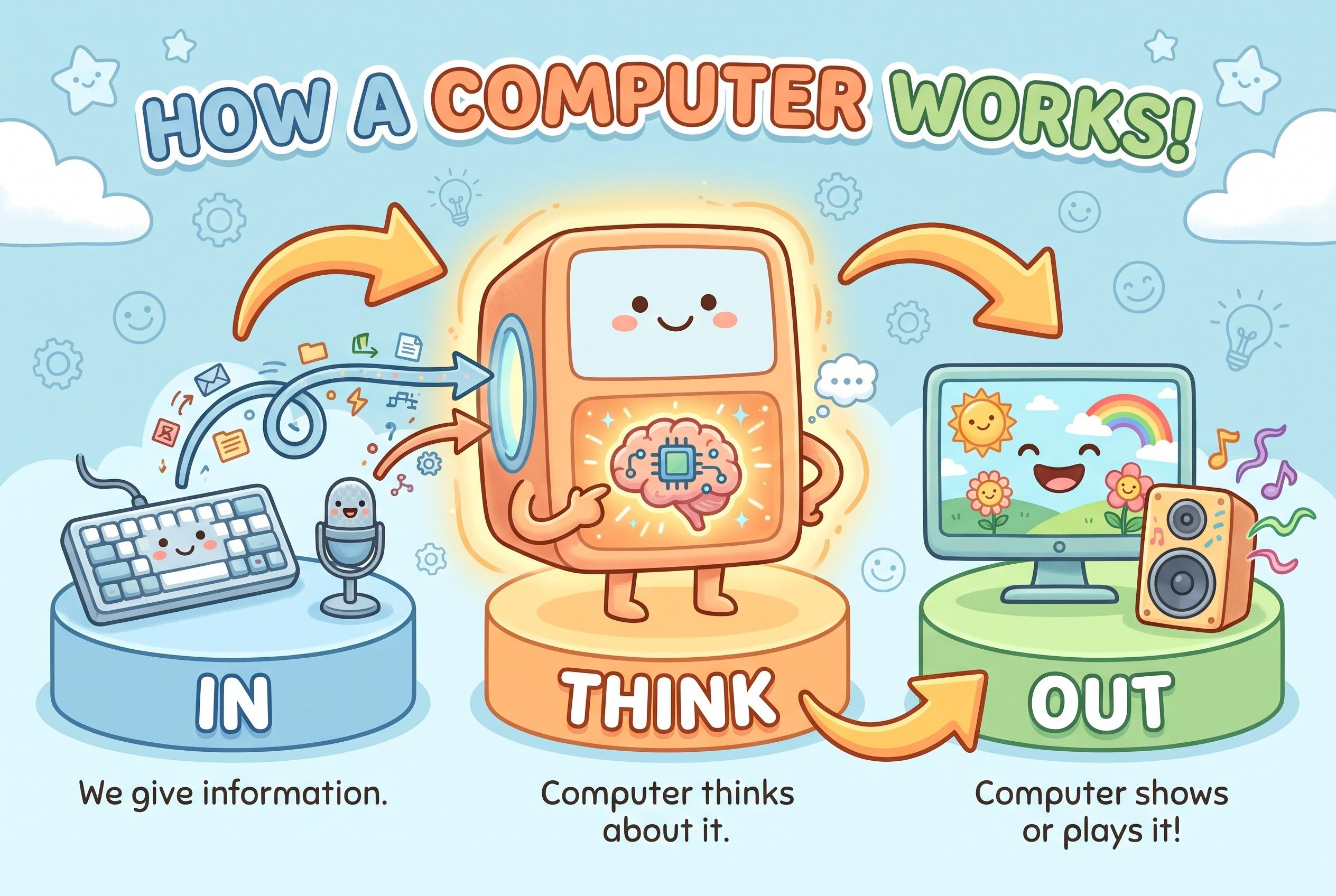
In → Think → Out
A computer is a bit like you. Your eyes and ears take things IN, your brain THINKS, and your hands or mouth do something OUT. A computer has the same three parts: a way in (keyboard, microphone), a chip that thinks, and a way out (screen, speaker).
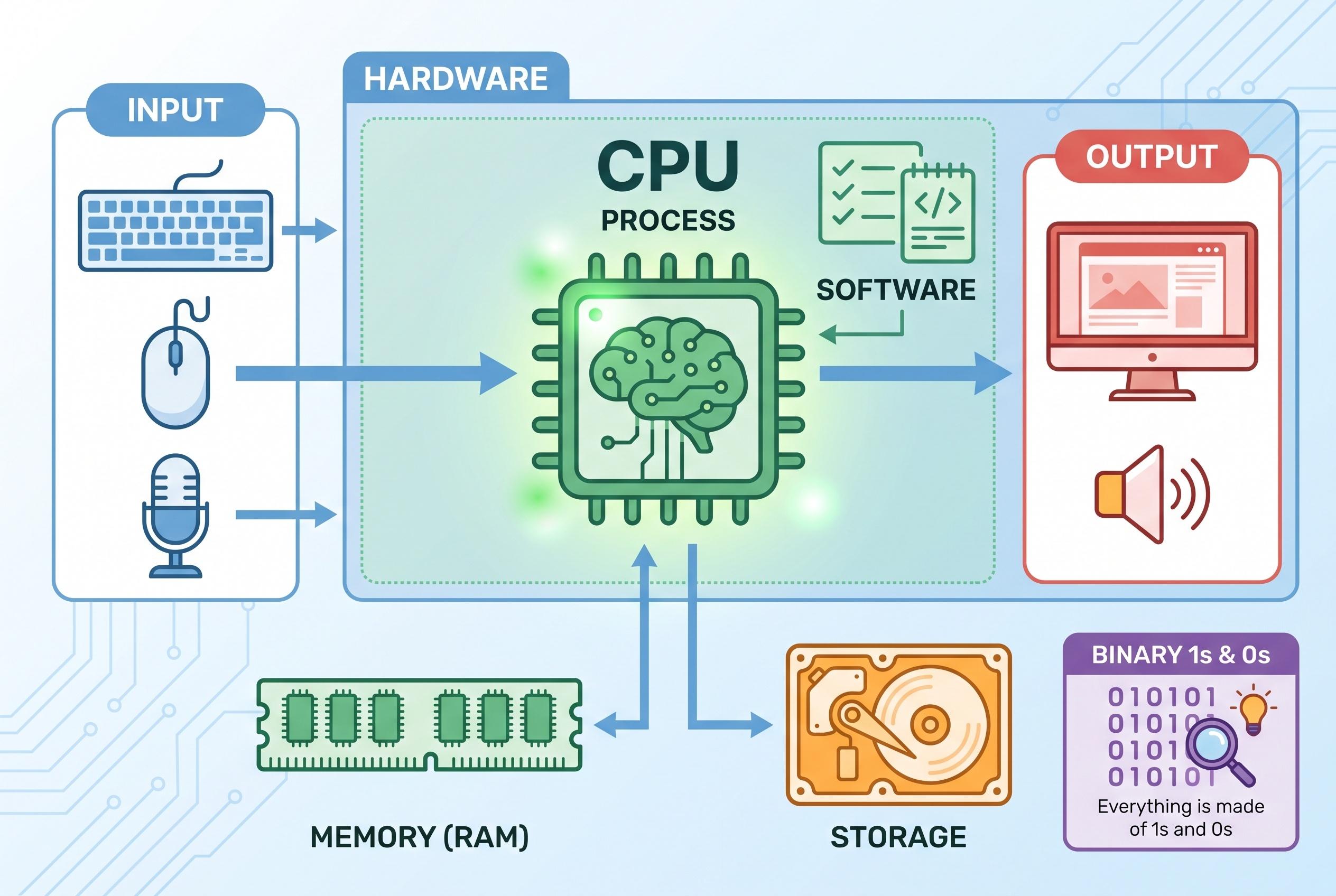
Hardware, software & 1s and 0s
A computer has hardware (the parts you can touch) and software (the instructions that tell it what to do). The CPU is the brain that runs the steps, RAM is short-term memory and storage is long-term memory. Underneath, everything is tiny switches that are on (1) or off (0), flipped billions of times a second.
The one-glance ladder
Knowledge check
Five quick questions, then five to answer in your own words. Anyone can submit and see their results. Sign in if you want your answers saved to come back to.
1.What are the three things a computer does?
2.Inside a computer, everything is made of…
3.A list of step-by-step instructions is called…
4.Which part is like the computer's brain?
5.What does a microphone let a computer do?
Explain in your own words
Answer these in your own words. Explaining a concept is the best test that you understand it. You can check your results now; sign in when you save to keep them in your account.