Argo
Product updates
What changed in Argo this week, from the build log.


More articles

A private AI brain for your company, on your own server: a step-by-step guide
How to run Second Brain and the Hermes agent on your own server, with private model inference through Venice, OpenRouter or Morpheus.
How to let your AI agent post to LinkedIn on a schedule
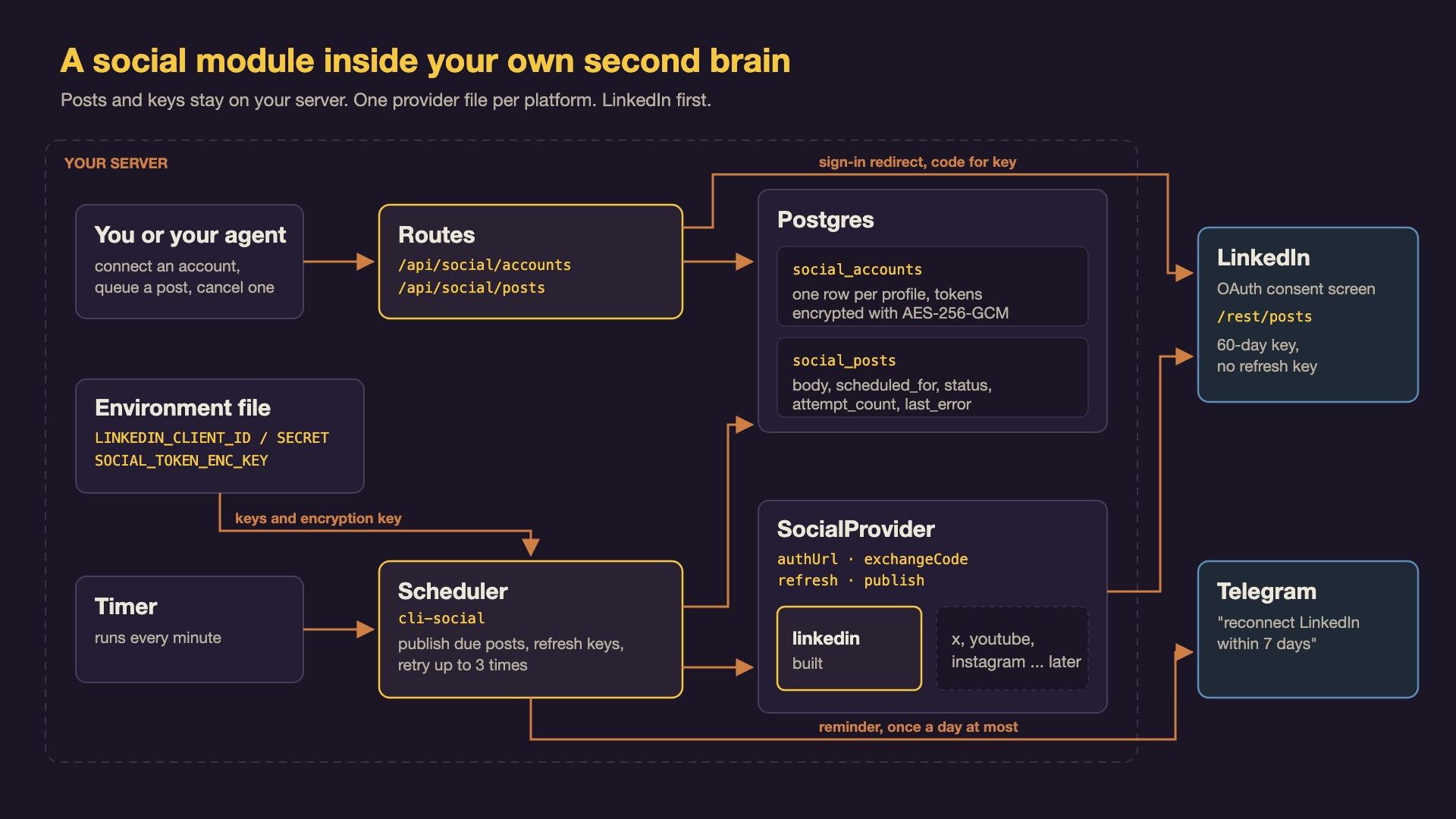
How our second brain connects a LinkedIn account, keeps its keys encrypted, and publishes queued posts, plus the prompts to build your own.

How secondbrain works: an open-source second brain you own
Inside the secondbrain engine: a markdown vault, a Postgres index, rules and hooks for AI agents, and the devices it runs on.

Argo build log, Day 4: Voronoi case redesign and two new blog posts
The Exo case gets a straight-walled Voronoi redesign, two new blog posts go live, and the build runs 323 minutes on stream.

How our company of AI bots works: one roster, one message board, one task board
How 22 AI bots on 8 teams get work from our kanban board, talk on a message board, report to the CEO and show up in our second brain app.

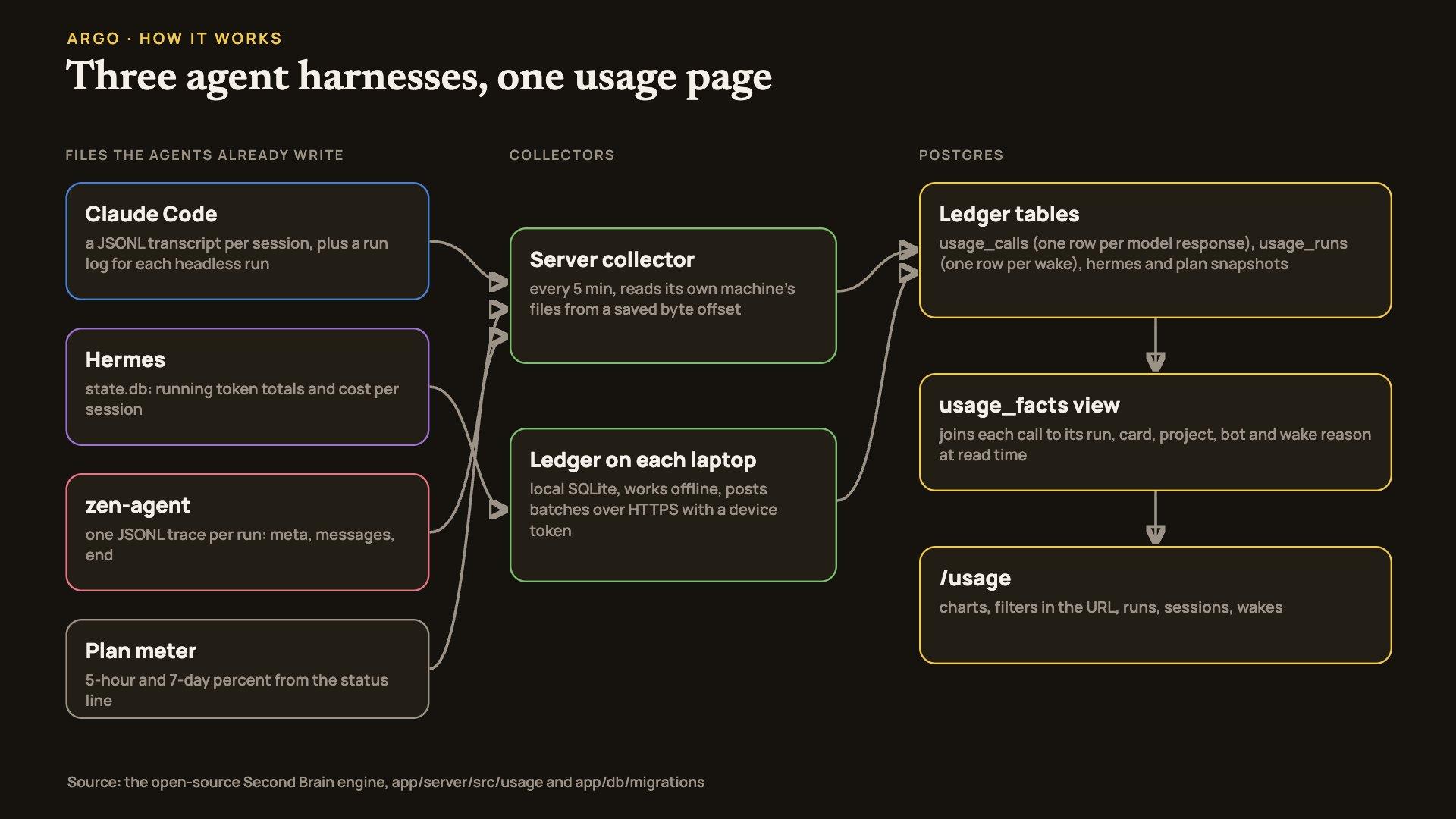
Where the tokens go: how we label every model call our AI agents make
How our usage page ties each model call to the agent, the reason it woke, the task, the project and the kind of work, and what the first week of data showed.

How we built a 3D map of our second brain, and how you can build your own
The architecture behind our 3D map of notes, projects and live numbers, the steps to build one, and a prompt to hand your own agent.

Giving our second brain a voice that never leaves the laptop
How we added local text-to-speech to our second brain with Kokoro-82M on a MacBook: a Listen button on every note, spoken alerts when Claude Code finishes, and a step-by-step guide to set it up yourself.

How our AI agents will know what they may share: privacy levels for a second brain
How we are designing privacy levels, compartments and release rules so every AI agent in our second brain knows what it may read, repeat and publish.

One rulebook for two agents: the harness behind our second brain
How we made Claude Code and Hermes share one instruction file, one guard script, a read-only fact-checker, a handoff note and a definition of done, and how to set it up for your own agents.

What Argo knows about you, and how you stay in charge of it
How Argo's new What Argo knows list works: which facts it learns from your journal, how your phone does the work without our servers keeping anything, how it handles change over time, and how you edit, end or delete any fact.

How Argo keeps your journal private: keys, encryption, and the honest exceptions
A plain-English walkthrough of Argo's zero-knowledge encryption: where your key is created, where it is stored, what our servers can and cannot read, when your words reach an AI, and the one exception during live voice calls.

What's new in Argo 1.0.1: Mirror and unlocking your journal with your wallet
Argo 1.0.1 reworks daily encouragements into Mirror, three reflections a day grounded in your own entries, and adds an optional third way to unlock your journal: your Ethereum wallet, alongside iCloud Keychain and your recovery code.
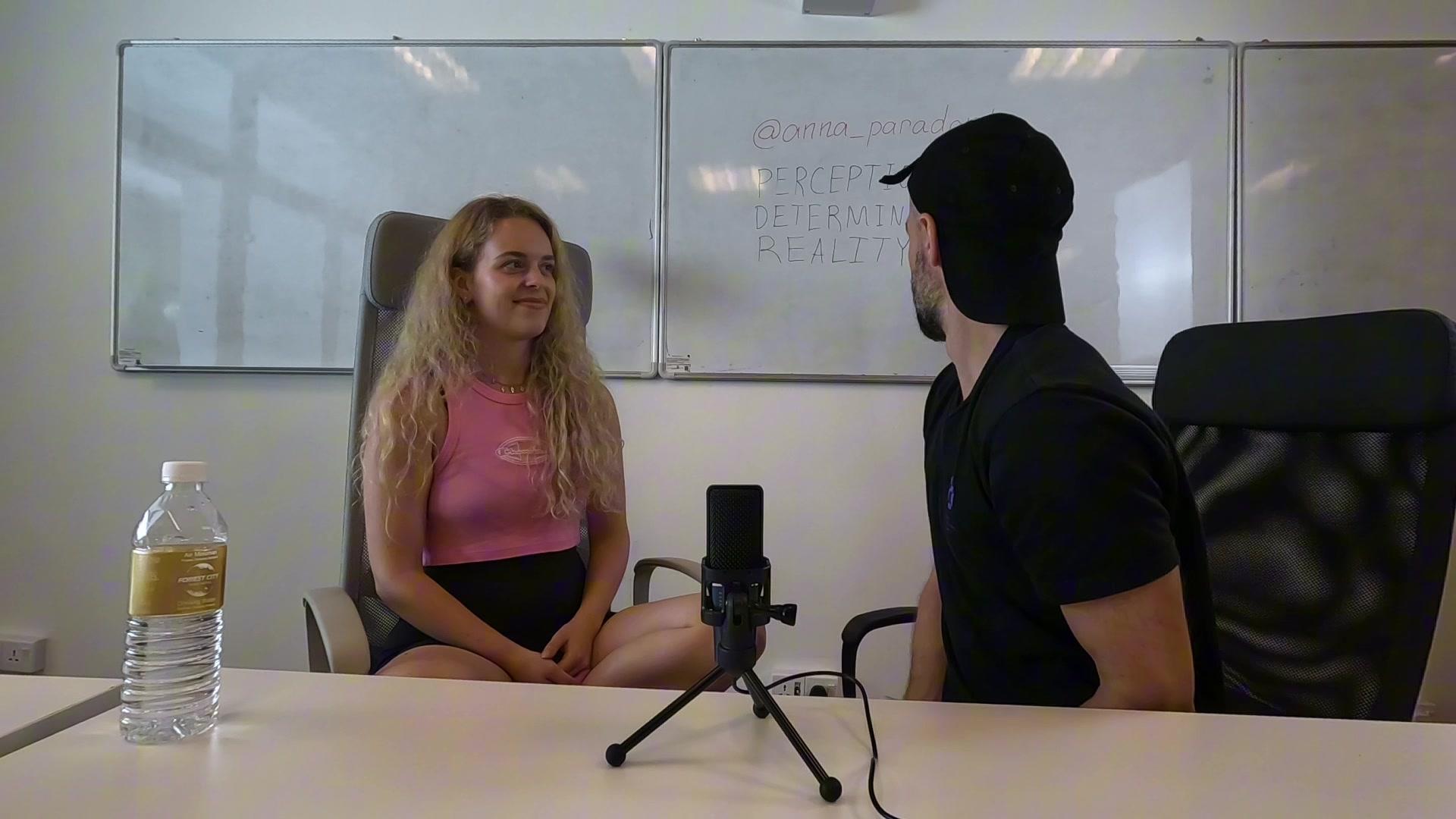
LLP#024, Anna Sokol: a life given to a meditation community
A Network School conversation with Anna Sokol, a meditation and awareness instructor who left Ukraine for Australia at sixteen and gave much of her twenties to Giving School, a meditation community with retreat centers in Latvia. On attention as the one tool we have, why most fear lives in the head, and what actually makes a community last: a whole-hearted shared goal, ongoing education, and everyone treating the project as their own.
LLP#023, Velveteen: the artist who helps founders tell their story
A Network School conversation with the artist Velveteen (Miriam Reza): a senior-year car crash that broke both hands, learning to draw left-handed to finish her art-school portfolio, studying design at NC State, moving from dark charcoal to bright animal-filled paintings meant to bring people joy, hidden symbols in her community pieces, her years in NFTs and film, and founding Chymira to turn deep tech research into a clear story. On what separates human art from AI: you put a piece of your soul into it.
LLP#022, Daria Chernozub: going global by going local
A Network School conversation with Daria Chernozub (Dasha), who leads global adoption for Dash. From a Russian central-bank sandbox and a first coin bought because it shared her name, to DevRel in Cyprus, local hubs for the Internet Computer, a year on Koh Phangan, and her rule for scaling anything: go global by going local.
LLP#018, From Hinton’s Class to “TikTok for Opinions”: Daniel Im
A conversation at Network School with Daniel Jiwoong Im, who learned ML from Geoffrey Hinton at Toronto (with Sutskever and Karpathy as TAs), trained AI models of fruit-fly brains at Janelia, and left a PhD to build companies. On the arc from an AI search engine and crypto market data to UBet’s betting AMM and Belief Market, a “TikTok for opinions,” and the wisdom of crowds that ties it all together.
The Founder Who Teaches Kids to Build With Chopsticks
A conversation at Network School with Chong Ing Kai, the 22-year-old founder of Stick ’Em, who went from building flamethrowers to winning a US$1M Hult Prize for making STEAM education accessible. On problem clarity, why he’d delay AI for kids, the day he risked jail to win a million dollars, and holding the tension every social entrepreneur faces.

The Loop and the Page: Why Rumination Predicts Depression, and Journaling Can Do the Opposite
Replaying a bad day in your head reliably predicts depression. Writing it down (done right) is one of the most studied self-help tools in psychology. Same raw material, opposite outcomes. Here is the difference, the science behind it, and how to journal for growth instead of feeding the loop.

The Other Half of Journaling: Writing to Build Your Mind, Not Just Empty It
Most journaling advice tells you to dump the noise and walk away lighter. But there’s an older, opposite practice (writing to think, to appreciate, and to understand) and the research says it’s where the real returns are.

The 750-Word Habit: Who Does It, Why It Works, and When It Doesn’t
Authors, founders, and ordinary people empty their minds onto the page every morning: roughly 750 words, private, unedited. Where the habit comes from, what four decades of research says it does, why privacy is the active ingredient, and the honest fine print.

The Soul Constellation: A Galaxy You Own
Why we’re turning your journaling into a living, one-of-one piece of art you truly own, how every 750-word day becomes a star placed by the meaning of your words, and why privacy is guaranteed by the math, not a promise.

What 750 Words a Day Does to Your Mind
Forty years of research on daily journaling, from working memory and focus to sleep, mood, and well-being. The science behind a 750-word daily entry, and why it compounds.